
Eu Solar Market Bird Protection Demand: European Solar Market Growth and the Rising Demand for Bird Protection
Eu solar market bird protection demand — Published by PV Protector® | Category: Industry & Market
EU solar market bird protection demand: European solar market growth drives demand for system protection
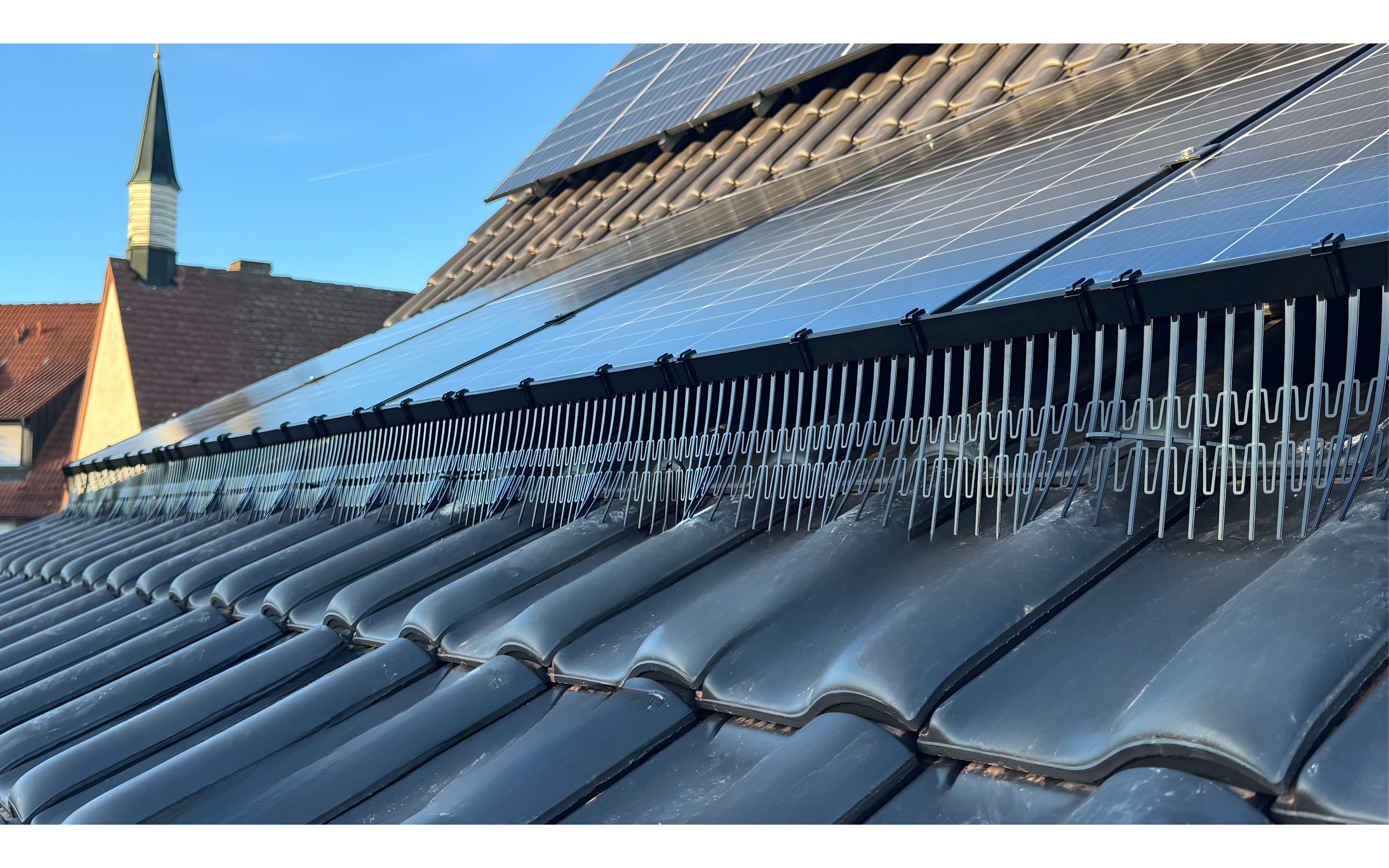
The European solar market is experiencing sustained, policy-driven growth. In 2024 alone, EU member states added over 65 GW of new photovoltaic capacity — a record figure that underlines the continent's commitment to the energy transition. National subsidy schemes, building-integrated PV mandates, and corporate sustainability targets are accelerating deployment across residential, commercial, and industrial segments.
This growth trajectory is well covered by industry analysts and trade media. What receives far less attention is the operational consequence: as millions of new rooftop systems come online across Europe's urban and suburban landscapes, the total exposure to bird-related system risk is growing in direct proportion.
This article examines the intersection between EU solar market expansion and the increasing demand for PV system protection — specifically, professional bird protection accessories designed for rooftop installations.
The Scale of European Solar Expansion
Europe's solar PV installed base has grown dramatically over the past five years. Several markets have emerged as consistent leaders in annual deployment.
Germany remains Europe's largest solar market, with strong residential uptake driven by feed-in tariffs, self-consumption incentives, and building energy regulations. The country's installed PV capacity exceeds 90 GW, with rooftop systems representing a significant share.
The Netherlands has one of the highest per-capita solar adoption rates in Europe, driven by net metering policies and dense suburban housing stock. Dutch rooftop PV penetration is among the highest in the world.
Poland has experienced rapid solar growth since 2020, particularly in the residential segment. Government programmes such as Mój Prąd have made Poland one of the EU's fastest-growing PV markets.
Italy and Spain combine strong solar irradiance with supportive policy frameworks, driving growth in both residential and commercial segments. Spain's self-consumption regulations have unlocked significant new capacity in recent years.
France, Austria, the Czech Republic, and Hungary are also expanding their rooftop PV fleets, supported by a mix of national subsidies, EU-level funding, and energy price signals.
Across the continent, the direction is clear: more solar panels on more rooftops, in more countries, every year.
Why Market Growth Creates Protection Demand
The link between solar market growth and bird protection demand is direct and structural.
Every rooftop PV installation in an urban or suburban environment creates a sheltered cavity between the modules and the roof surface. For feral pigeons — present in every major European city and most suburban areas — this cavity is an attractive nesting and roosting site. The consequences of established bird colonies beneath PV arrays are well documented.
Soiling and yield loss. Bird droppings on module surfaces reduce light transmission and energy output. Concentrated soiling can also create hotspot conditions, accelerating cell degradation and reducing module lifespan.
Cable and connector damage. Nesting birds frequently peck at DC cable insulation, particularly around connectors and cable clips. Exposed conductors increase the risk of DC arc faults — a recognised fire hazard in PV installations.
Debris accumulation. Nesting material, feathers, and organic matter accumulate beneath modules over time, blocking ventilation and creating conditions for moisture retention and corrosion.
Cumulative maintenance costs. Bird-related problems are not one-off events. Pigeons exhibit strong site fidelity, returning to established nesting sites season after season. Without physical exclusion, maintenance visits for nest removal, cleaning, and cable inspection become a recurring operational expense.
As Europe's installed rooftop PV base expands, the total number of systems exposed to these risks grows proportionally. The addressable market for bird protection accessories is scaling with the installed base — and accelerating as older, unprotected systems begin to experience problems.
The Shift from Niche Accessory to Standard Specification
In the early years of European rooftop solar, bird protection was treated as an aftermarket add-on — something addressed only after problems had already developed. Installers rarely included it in initial project specifications, and distributors stocked it, if at all, as a minor accessory line.
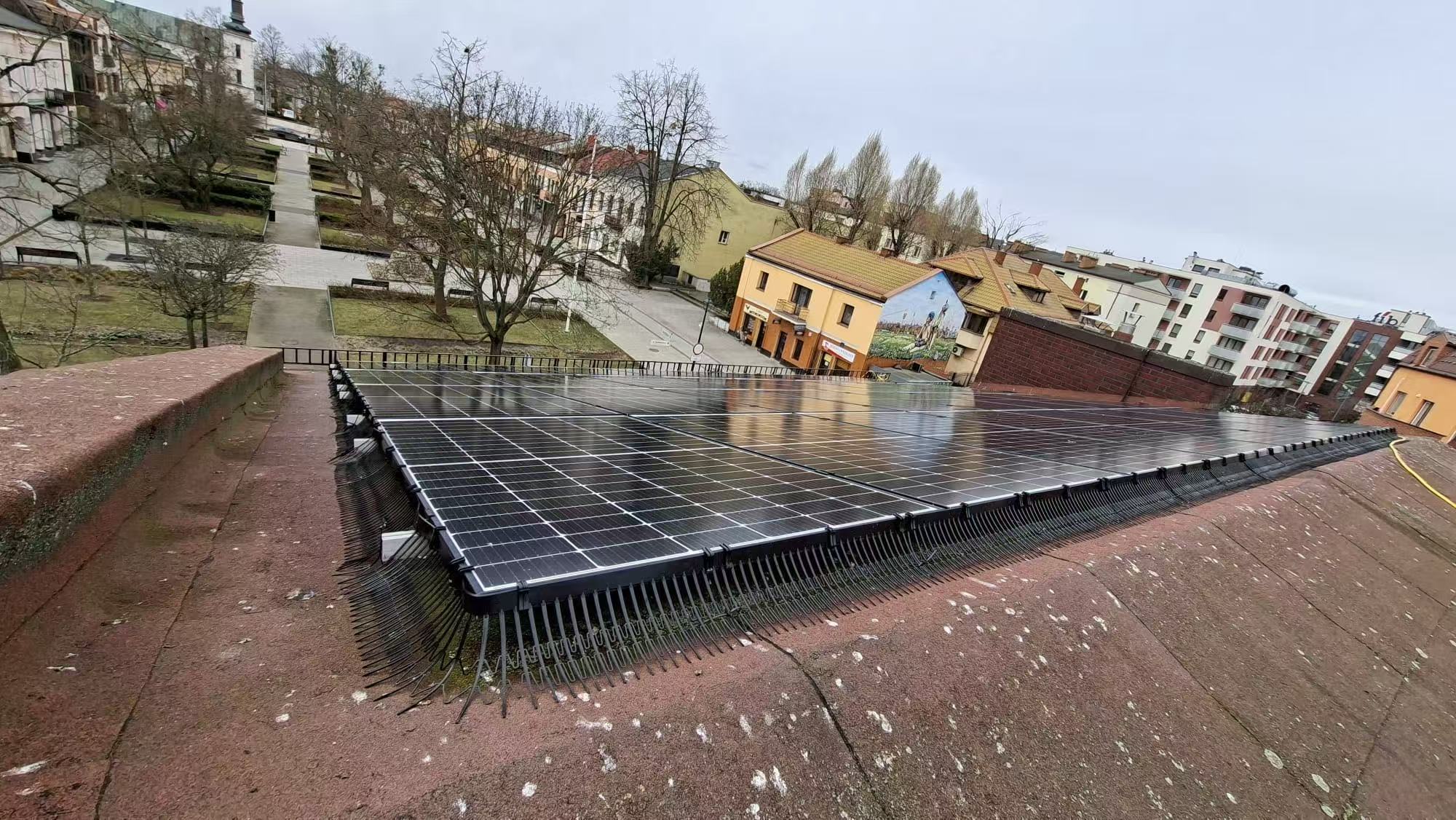
This is changing. Several factors are driving the shift toward inclusion at the point of installation.
Installer experience. As the European PV fleet matures, more installers have direct experience with bird-related callbacks, warranty queries, and customer complaints.
Customer awareness. System owners who see neighbours dealing with pigeon problems on their solar panels are increasingly requesting protection upfront.
Cost transparency. The financial case for commissioning-stage protection versus 25 years of reactive maintenance is becoming well documented.
Distributor portfolio development. Major European PV distributors are expanding their accessory catalogues to include bird protection systems alongside mounting hardware, cable management, and safety equipment.
What This Means for Solar Installers
For solar installers operating in the European market, the growth of bird protection demand creates several practical opportunities.
Margin improvement. Including bird protection as a standard line item in installation quotes adds revenue per project without requiring significant additional labour.
Reduced callback risk. Systems installed with perimeter protection are significantly less likely to develop bird-related problems over their operational life.
Competitive differentiation. In an increasingly competitive installer market, offering a comprehensive installation package — including system protection — distinguishes professional operators from those who install modules and leave.
Retrofit business. The growing base of older, unprotected systems represents a retrofit market opportunity for installers who offer bird protection as an add-on service.
What This Means for Distributors and EPC Companies
For PV distributors and EPC companies, the trend is equally relevant.
Catalogue expansion. Adding professional bird protection systems to the product portfolio serves a growing and recurring demand.
Project specification. EPC companies responsible for commercial and industrial PV installations are increasingly including system protection in project specifications.
Market positioning. Distributors and EPCs that position themselves as full-system solution providers strengthen their value proposition in a market where differentiation is becoming more important.
The European Outlook
The EU's solar growth trajectory shows no sign of slowing. Policy frameworks such as the REPowerEU plan, national building energy directives, and corporate sustainability mandates will continue to drive rooftop PV deployment across the continent for the foreseeable future.
As the installed base grows, so does the operational reality of managing these systems over their 25-year lifespans. Bird protection is one of the most straightforward and cost-effective measures available to protect system performance, reduce maintenance costs, and extend component lifespan.
The market for PV system protection accessories is growing — and the installers, distributors, and EPCs who recognise this trend early will be well positioned to capture it.
Conclusion
Europe's solar market expansion is creating a parallel growth opportunity in system protection. As millions of new rooftop PV installations come online across the continent, the demand for professional bird protection is scaling with the installed base.
For solar professionals — whether installers, distributors, or EPC companies — including bird protection as a standard part of the installation process is both a risk management strategy and a business development opportunity. The market is growing. The question is whether your business is positioned to grow with it.
PV Protector® develops professional clip-mounted bird protection systems for rooftop solar installations. Our products are designed for fast installation at commissioning, require no drilling or adhesive, and are compatible with all common module frame profiles. Learn more at www.pv-protector.com.
Comments