
Seasonal Bird Activity Solar Maintenance: A Year-Round Planning Guide
Seasonal bird activity solar maintenance — Published by PV Protector® | Category: Maintenance & O&M
Bird-related damage to photovoltaic systems is not a random event. It follows a predictable seasonal cycle driven by the breeding biology and roosting behaviour of feral pigeons — the species responsible for the vast majority of bird-related PV problems across Europe.
For O&M providers, system owners, and facility managers, understanding this cycle is not academic. It has direct implications for when inspections should be scheduled, what to look for at each stage, and how to plan preventive maintenance budgets. A maintenance programme that ignores the seasonal pattern of bird activity risks being either too early to detect problems or too late to prevent damage.
This article maps the annual cycle of bird activity on PV systems and provides a practical framework for aligning maintenance planning to seasonal risk.
Seasonal Bird Activity Solar Maintenance: The Annual Cycle of Bird Activity on PV Systems
February–April: Nesting Season Onset
Feral pigeons are among the earliest breeding birds in the urban environment. As daylight hours increase and temperatures begin to rise in late winter, pairs begin scouting for nesting sites. The cavity beneath PV modules — elevated, sheltered, warm, and largely undisturbed — is one of the most attractive locations available.
By March, nest-building is underway. Pigeons construct rudimentary nests from twigs, feathers, and debris, typically placed directly on the roof surface beneath the module. This material accumulates around DC cables, connector housings, and junction boxes.
Key risks during this period:
Nesting material contacting or wrapping around DC cables
Early-stage debris accumulation blocking ventilation beneath modules
Increased droppings concentration on and around the array perimeter
May–July: Peak Breeding and Fledgling Period
This is the period of maximum biological pressure on the PV system. Established pairs produce their first clutch of the year (typically two eggs), and successful pairs may begin a second clutch before the first fledglings have fully left the nest site.
The volume of organic material beneath the array increases significantly during this period. Nesting debris, feathers, eggshell fragments, and droppings accumulate rapidly. Fledgling birds are less mobile and contribute additional waste to the immediate nesting area.
Key risks during this period:
Cable insulation damage from pecking — adult and fledgling pigeons chew on exposed cables
Soiling of module surfaces reduces energy yield, particularly on modules directly above active nests
Connector corrosion accelerates as acidic droppings concentrate on MC4 connectors and junction boxes
Thermal stress increases as debris blocks airflow beneath modules, reducing natural convective cooling
August–October: Late Breeding and Transition to Roosting
Pigeon breeding does not stop abruptly at the end of summer. In favourable conditions, breeding can continue through September, with a second or third clutch produced by established pairs. Late-summer nesting activity is often concentrated in the most sheltered areas of the array.
As temperatures drop in autumn, pigeons gradually transition from active nesting to roosting behaviour. The PV array remains an attractive overnight roost — offering shelter from wind and rain, thermal mass from retained heat, and elevation from ground-level disturbance.
Key risks during this period:
Accumulated nesting material from the full breeding season now represents the maximum debris load
Cable and connector damage that developed over spring and summer may now be at a critical level
Droppings continue to accumulate from roosting activity, maintaining the soiling and corrosion cycle
November–January: Winter Roosting
Bird activity is at its lowest level during winter, but it does not cease. Roosting pigeons use the PV array throughout the cold months. Droppings continue to accumulate, though at a lower rate than during the breeding season.
This period is also when accumulated damage from the previous breeding season may manifest as electrical faults. Cables weakened by months of pecking and corrosion are more vulnerable to temperature-related stress. Arc fault risk increases as insulation degradation progresses.
Key risks during this period:
Reduced but ongoing soiling from roosting activity
Latent damage from the breeding season may trigger electrical faults during winter temperature cycling
Nesting material that remained in place over autumn becomes dry and increasingly flammable
Aligning PV Maintenance with Seasonal Bird Activity
Recommended Inspection Schedule
Based on the seasonal cycle described above, the following inspection schedule provides the best coverage for bird-related risks:
Late Winter Inspection (February)
Purpose: Pre-nesting assessment and site preparation
This inspection should take place before nesting begins in earnest. The objective is to assess the condition of the array after winter roosting, clear any accumulated debris, and identify early signs of bird activity.
Checklist:
Visual inspection of module perimeters for nesting material
Cable inspection for insulation damage — particularly at module-level cable runs
Connector inspection for corrosion or droppings contamination
Debris clearance from beneath modules and around mounting hardware
Assessment of any existing bird protection measures for integrity
Late Spring Inspection (May)
Purpose: Post-nesting damage assessment
By May, the first nesting cycle is largely complete. This inspection focuses on identifying damage that has occurred during the initial breeding period and assessing the ongoing risk level.
Checklist:
Detailed cable inspection — look for pecking marks, exposed conductors, and insulation thinning
Connector testing — check resistance values at MC4 connections, look for visible corrosion
Module surface soiling assessment — identify heavily soiled modules and assess yield impact
Nesting material volume assessment — estimate debris accumulation rate
Thermal imaging if available — identify hot spots that may indicate cable damage or connector degradation
Autumn Inspection (September–October)
Purpose: End-of-season review and winter preparation
This inspection captures the cumulative impact of the full breeding season. It is the most important inspection of the year for identifying cable damage, connector degradation, and fire risk factors.
Checklist:
Comprehensive cable inspection — this is when insulation damage is most likely to have reached a critical level
Connector resistance testing
Full debris clearance — remove all nesting material before it dries and becomes a fire risk over winter
Assessment of ventilation pathways — ensure airflow beneath modules is not obstructed
Documentation of damage for warranty claims or insurance reporting
The Preventive Alternative: Physical Exclusion
The inspection schedule above is necessary for systems that are already exposed to bird activity. However, the most effective and cost-efficient approach is to prevent nesting entirely through physical exclusion.
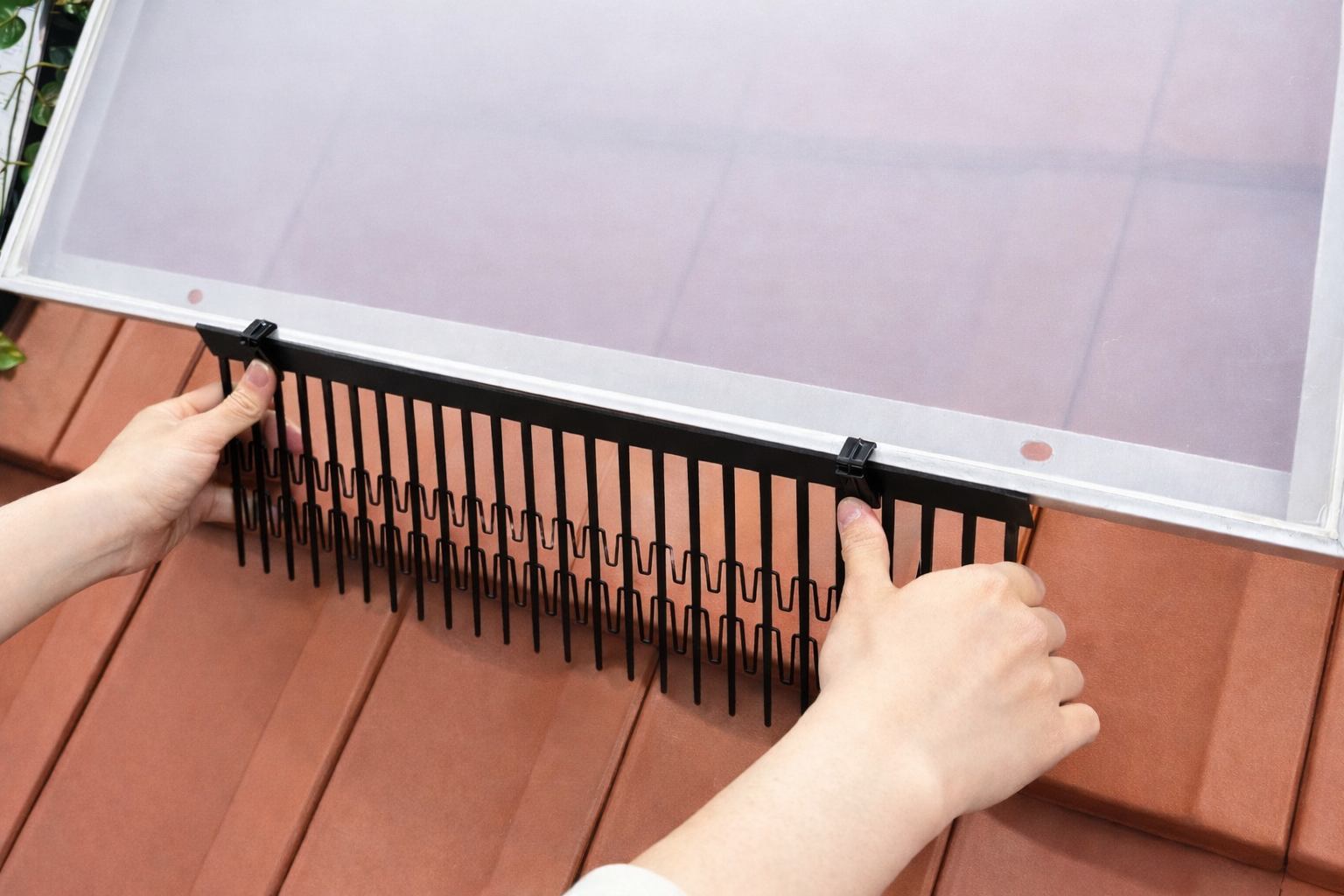
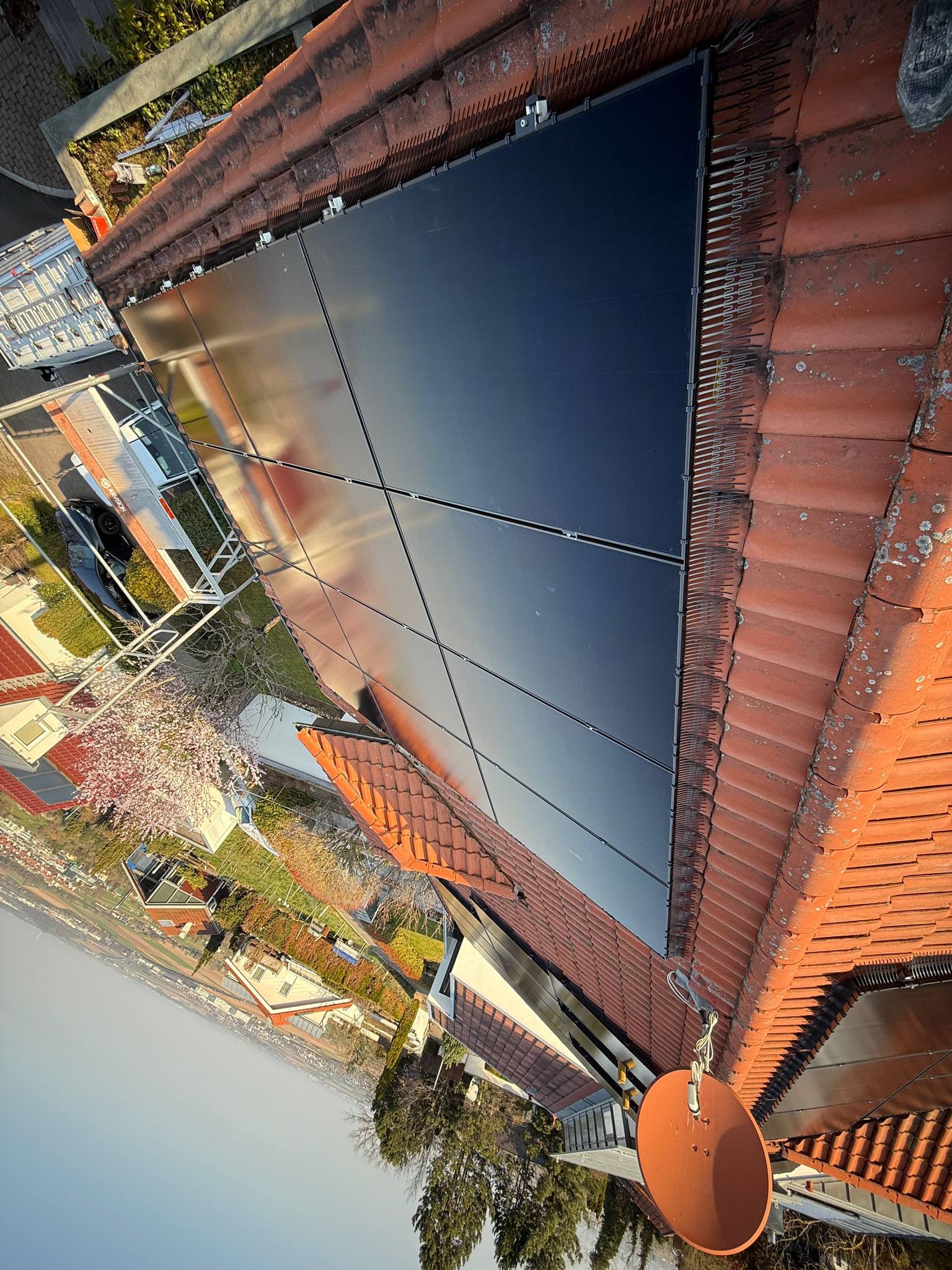
A clip-mounted perimeter mesh system — such as PV Protector® — seals the cavity beneath PV modules so that birds cannot enter. When installed at commissioning, this eliminates the entire seasonal cycle of nesting, debris accumulation, cable damage, and soiling.
For O&M providers, this translates directly to reduced maintenance costs, fewer reactive callouts, and more predictable budget planning. For system owners, it means better energy yield, lower degradation risk, and a longer system lifespan.
The cost of installing mesh at commissioning is typically a fraction of the cumulative cost of three seasonal inspections per year over a 25-year system lifetime — not including the repair costs that those inspections are likely to identify.
Conclusion
Bird activity on PV systems follows a clear and predictable seasonal pattern. Nesting begins in late winter, peaks through spring and summer, transitions to roosting in autumn, and continues at a reduced level through the winter months.
O&M providers and system owners who align their maintenance schedules with this cycle will detect problems earlier, reduce reactive maintenance costs, and better protect system performance.
The most effective strategy, however, is proactive: install physical bird exclusion at commissioning and remove the seasonal risk entirely. For professional solar installers and EPC companies, offering bird protection as standard is both a service to the client and a sound operational decision.
PV Protector® — Professional bird protection for solar installations. Learn more at www.pv-protector.com
Comments