
Solar Panel Bird Deterrent Products: What Works and What Doesn't
Bird deterrent solar panels comparison — Published by PV Protector® | Category: Technical Solutions
A growing number of products are marketed as solar panel bird deterrent solutions.
For solar installers and system owners trying to make an informed purchasing decision, the range of options can be confusing — and the marketing claims are not always grounded in field performance data.
This article provides an objective technical comparison of the main bird deterrent categories used in PV installations, with an assessment of their practical effectiveness based on installer field experience and published bird management research.
Solar panel bird deterrent comparison by product category
1. Physical Exclusion Mesh (Clip-Mounted)
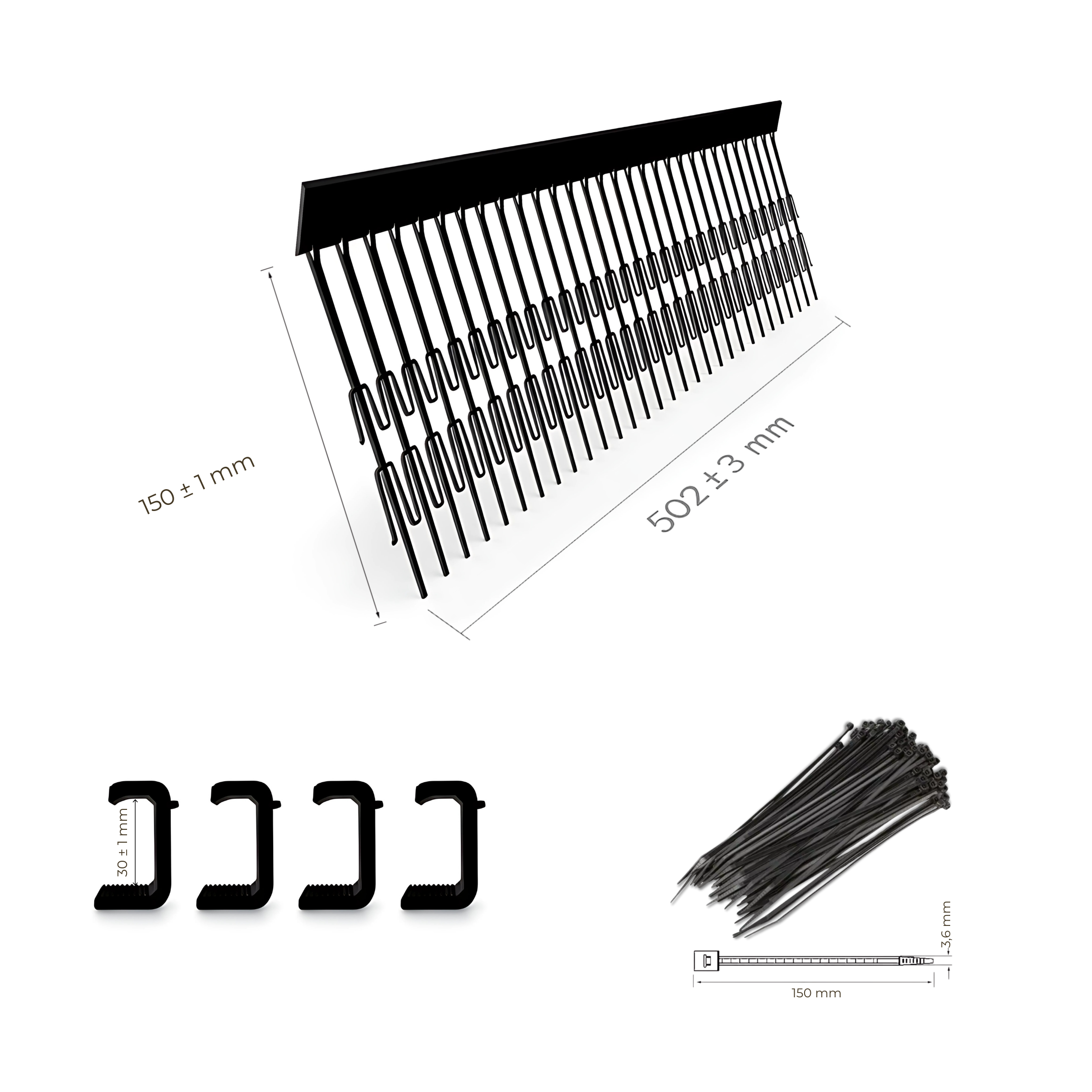
How it works: A perimeter mesh is installed around the outer edge of each solar module's frame using purpose-designed clips. The mesh extends from the frame edge down to the roof surface, closing the gap that birds use to access the space beneath the panels.
Mechanism of action: Physical exclusion — the nesting cavity is inaccessible. Birds cannot enter the space regardless of how motivated they are to do so.
Long-term effectiveness: High. The mechanism does not depend on bird perception or behaviour — if the physical barrier is correctly installed and maintained, access is excluded. No habituation effect.
Installation complexity: Low to moderate for an experienced solar installer. Clips attach to the module aluminium frame without drilling or adhesive. Installation can typically be completed within the standard commissioning workflow.
Roof impact: None. Clip-based systems require no roof penetrations.
Limitations: Must be correctly sized to the module frame profile. Gaps or incorrect installation create entry points. Requires module access, so installation is simpler at commissioning than as a retrofit on occupied nests.
Assessment: The professional standard for PV bird protection. Consistent effectiveness, no long-term maintenance requirements beyond periodic visual inspection.
2. Anti-Perching Spikes
How it works: Plastic or stainless steel spike strips are attached to panel frame top surfaces or mounting rails to prevent birds from landing on the frame.
Mechanism of action: Physical deterrence of perching on the frame surface.
Long-term effectiveness: Limited for the primary bird problem. Anti-perching spikes address frame perching but do not prevent birds from accessing the space beneath the panel — which is where nesting occurs. Birds can land adjacent to spikes and walk to the frame perimeter, or access the underside cavity from the roof surface without needing to perch on the frame.
Installation complexity: Low.
Roof impact: None if frame-mounted.
Limitations: Does not address nesting beneath panels — which is the primary source of cable damage, ventilation restriction, and maintenance cost. May be effective for reducing frame-top roosting soiling in combination with other measures.
Assessment: Useful as a supplementary measure for frame-top roosting. Not a primary solution for bird nesting beneath panels.
3. Ultrasonic Deterrent Devices
How it works: Battery or mains-powered devices emit high-frequency sound signals intended to create an uncomfortable acoustic environment for roosting or nesting birds.
Mechanism of action: Acoustic deterrence — targeting the bird's acoustic sensitivity range.
Long-term effectiveness: Low for established nesting sites. Urban bird species — particularly feral pigeons — habituate to acoustic deterrents within days to weeks when the nesting site offers sufficient environmental advantages. Published bird management research does not support ultrasonic devices as a reliable long-term deterrent for established nesting birds.
Installation complexity: Low. Devices are typically placed near the installation.
Roof impact: None.
Limitations: Battery-powered devices require maintenance. Effectiveness is inversely proportional to the attractiveness of the nesting site — strong nesting site drivers (warmth, elevation, shelter) override acoustic deterrence. No effectiveness against nesting once established.
Assessment: Not recommended as a primary solution for PV bird protection. May have some limited short-term deterrent effect for naive birds before a colony establishes.
4. Visual Deterrents (Reflective Tape, Predator Silhouettes, Optical Gel)
How it works: Reflective or moving visual stimuli, or silhouettes of predatory birds, are placed near the installation to deter birds visually. Optical gel creates a visual and olfactory deterrent effect.
Mechanism of action: Visual deterrence — exploiting prey species' instinctive avoidance responses.
Long-term effectiveness: Low for established nesting birds. As with acoustic deterrents, habituation occurs rapidly when the site advantages remain available. Urban pigeons in particular show high tolerance for novel visual stimuli and habituate quickly.
Installation complexity: Low.
Limitations: Rapid habituation. Requires periodic repositioning or replacement to maintain any deterrent effect. Weather-dependent — reflective materials degrade over time.
Assessment: Not recommended as a primary solution. Temporary deterrent effect only.
5. Large-Format Roof Netting
How it works: A fine-mesh net is installed over the entire roof section containing the PV array, suspended above the modules, creating a physical exclusion barrier at the roof level rather than at the module level.
Mechanism of action: Physical exclusion at the installation perimeter.
Long-term effectiveness: High if correctly installed and maintained. No habituation effect — birds cannot access the roof section.
Installation complexity: High. Installation requires scaffold or access equipment for large systems, and typically involves anchor points at roof perimeter or structure. Ongoing maintenance is required to identify and repair net damage.
Roof impact: Anchor points require careful waterproofing. Access for module maintenance requires removal or opening of netting sections.
Limitations: High cost relative to module-level mesh. Restricts roof access for maintenance. Specialist installation typically required.
Assessment: Viable for large commercial or ground-mount installations with specific access constraints. Disproportionate for residential or standard commercial rooftop systems.
Summary Comparison Table
Clip-mounted mesh: Primary Mechanism: Physical exclusion | Effectiveness (Nesting): High | Habituation Risk: None | Complexity: Low–Moderate | Roof Impact: None
Anti-perching spikes: Primary Mechanism: Perch deterrence | Effectiveness (Nesting): Low (nesting) | Habituation Risk: Low | Complexity: Low | Roof Impact: None
Ultrasonic devices: Primary Mechanism: Acoustic deterrence | Effectiveness (Nesting): Low | Habituation Risk: High | Complexity: Low | Roof Impact: None
Visual deterrents: Primary Mechanism: Visual deterrence | Effectiveness (Nesting): Low | Habituation Risk: High | Complexity: Low | Roof Impact: None
Roof netting: Primary Mechanism: Physical exclusion | Effectiveness (Nesting): High | Habituation Risk: None | Complexity: High | Roof Impact: Moderate
Conclusion
For solar installers specifying bird protection for rooftop PV systems, the evidence consistently supports clip-mounted physical exclusion mesh as the most effective and practical solution. It addresses the primary problem — nesting access beneath the panel — through a physical mechanism that is not subject to habituation, can be installed within the standard commissioning workflow, and requires no roof penetrations.
Alternative deterrent products may provide short-term displacement effects but do not offer reliable long-term protection against the established colonial nesting behaviour of the species most commonly responsible for PV bird damage.
For more information on PV Protector® bird protection systems for solar installers, visit www.pv-protector.com
Comments