
Birds Nesting Under Solar Panels: Sparrows and Starlings vs Pigeons — What Installers Need to Know
Updated: Apr 24
When you pull back a solar array to investigate birds nesting under solar panels, the species matters. Most installers assume it's pigeons — and in urban residential settings, that's often correct. But sparrows and starlings present different nesting behaviour, different damage patterns, and occasionally different installation challenges. Understanding the distinction helps you diagnose problems faster, educate your customer more effectively, and specify the right protection from the outset.
This article breaks down the key differences between the three most common species found nesting under pitched-roof solar arrays in Europe: house sparrows, starlings, and feral pigeons.
Why Species Identification Matters on Site
When a homeowner calls about "birds under my panels", they rarely know which species. But the answer changes how you approach the job:
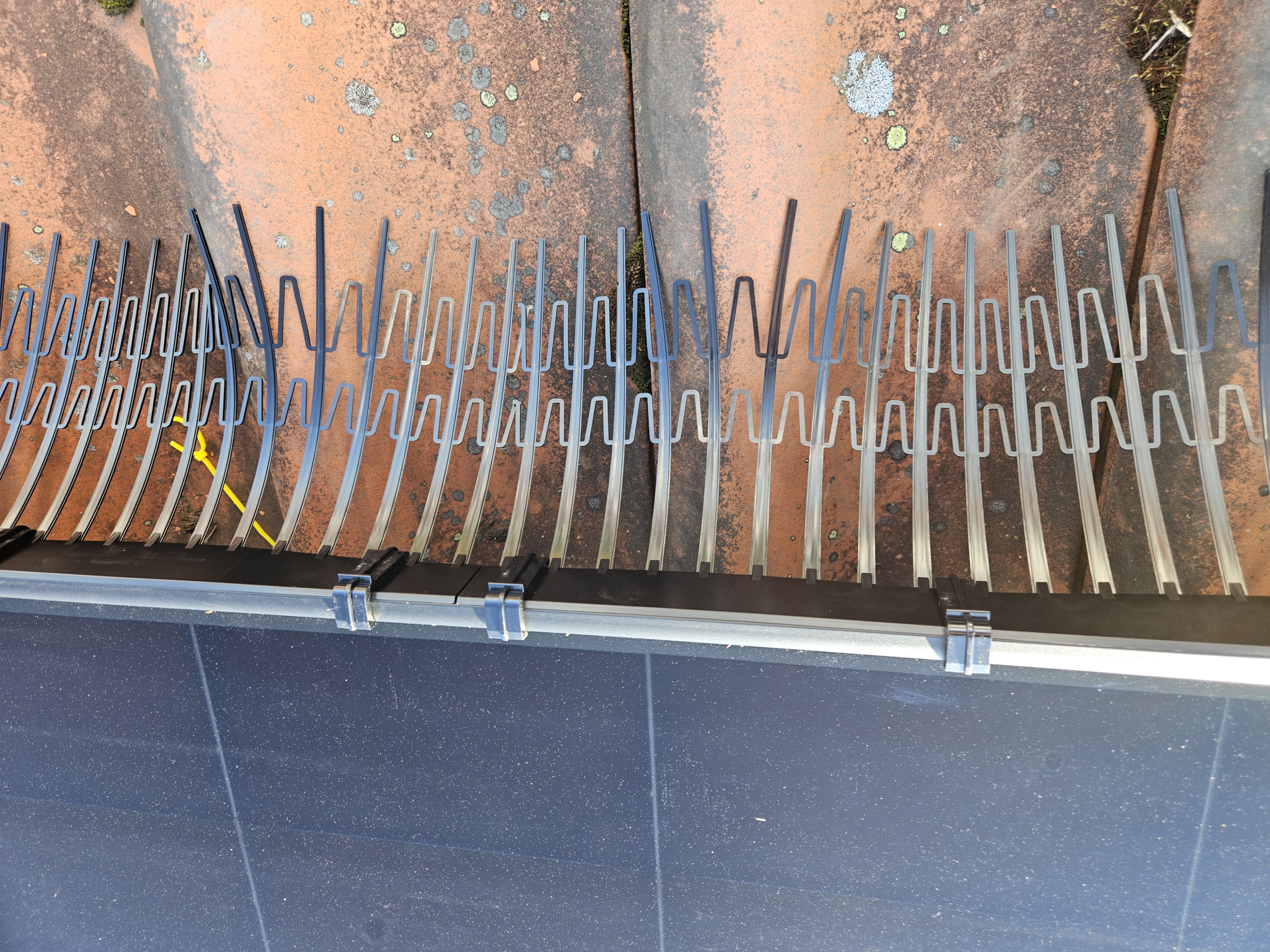
- Sparrows and starlings exploit smaller gaps and often nest in cavities near the frame perimeter or under ridge tiles. Their nests are compact, built from grass and feathers, and less likely to block large sections of the array. However, their droppings are just as corrosive, and their presence indicates that even narrow gaps exist in the perimeter.
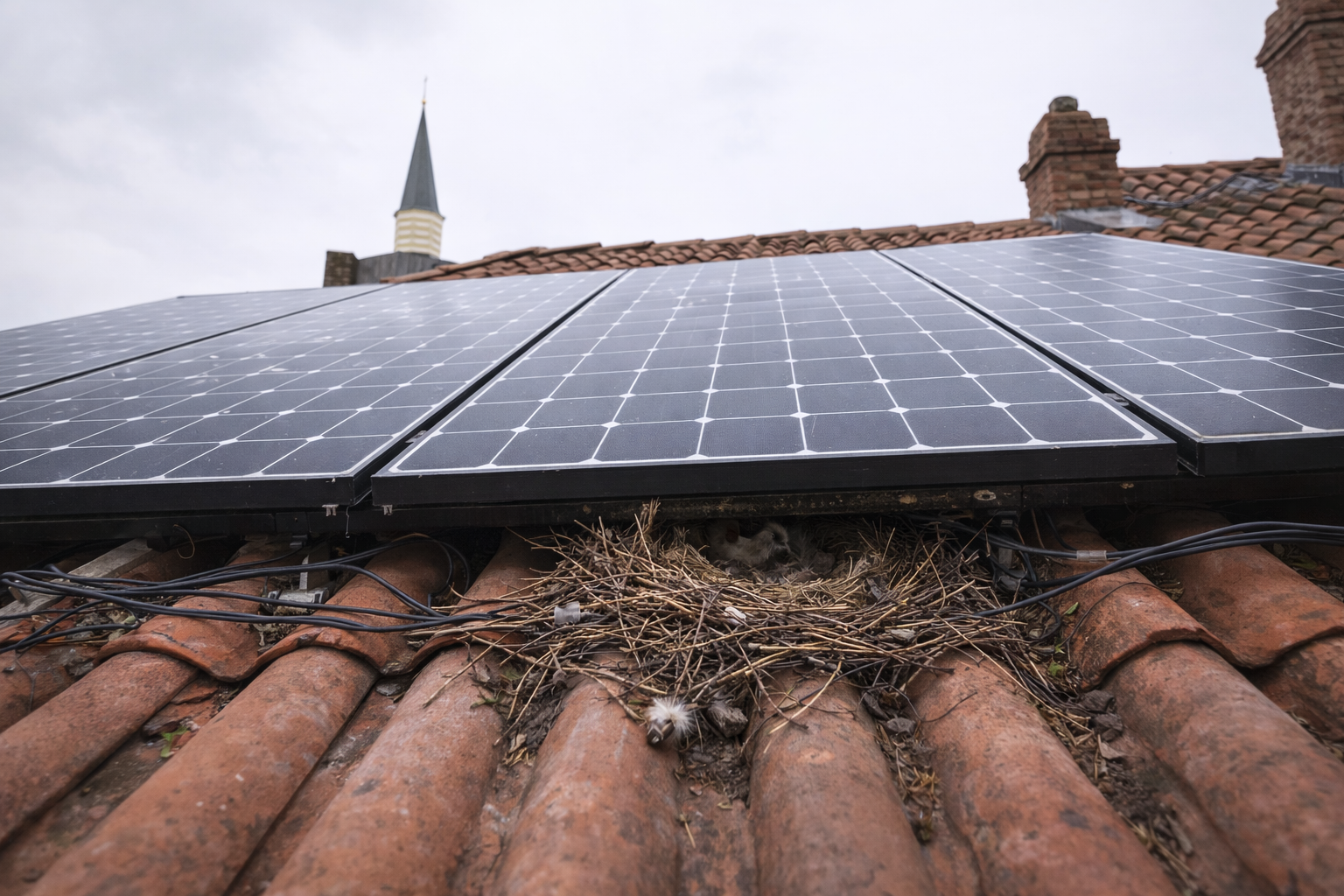
- Pigeons are larger, more visible, and build bulkier nests from twigs. A pigeon nest can block ventilation across multiple panels and create fire-risk conditions if nesting material contacts DC cables. Pigeons also produce significantly more droppings per bird.
- Starlings fall somewhere in between: slightly smaller than pigeons but more aggressive in cavity occupation. A starling colony can return year after year to the same installation if the entry point remains unprotected.
From a protection standpoint, all three species are excluded by a continuous perimeter barrier. But knowing which species you're dealing with helps you:
1. Set realistic expectations with the customer about the scale of the problem 2. Identify whether the array has larger structural gaps (pigeons) or just narrow frame tolerances (sparrows) 3. Explain why a partial or incomplete protection system won't work
For more context on why bird protection for solar panels is essential, regardless of species, see our pillar guide.
House Sparrows: The Small-Gap Specialists
Scientific name: Passer domesticus Body length: 14–16 cm Common locations: Urban and suburban residential rooftops, particularly on pitched tile roofs with ridge gaps
Nesting Behaviour
House sparrows are opportunistic cavity nesters. Under solar arrays, they typically enter through:
- Narrow gaps between the panel frame and roof tiles (as small as 15–20 mm) - Ridge tile gaps where the array meets the roof peak - Damaged or poorly fitted roof flashing
Sparrow nests are compact, made from dried grass, feathers, and occasionally synthetic fibres scavenged from nearby gardens. A typical nest is 10–15 cm in diameter. Sparrows are colonial: if one pair nests successfully, others will follow within the same installation. It's not uncommon to find four to six sparrow nests under a 4 kWp domestic array.
Damage Patterns
Sparrows cause less structural obstruction than pigeons, but their presence indicates perimeter vulnerability. Key risks include:
- Droppings accumulation on the panel surface and in roof gutters. Sparrow droppings are acidic and contribute to soiling losses, though the volume per bird is lower than pigeons. - Nesting material near cables. While sparrows don't build large stick nests, grass and feathers can still contact DC cabling if the nest is positioned near a junction box or cable run. - Repeat occupation. Sparrows return to successful nesting sites year after year. If the gap remains open after the nesting season, expect them back the following spring.
Installation Considerations
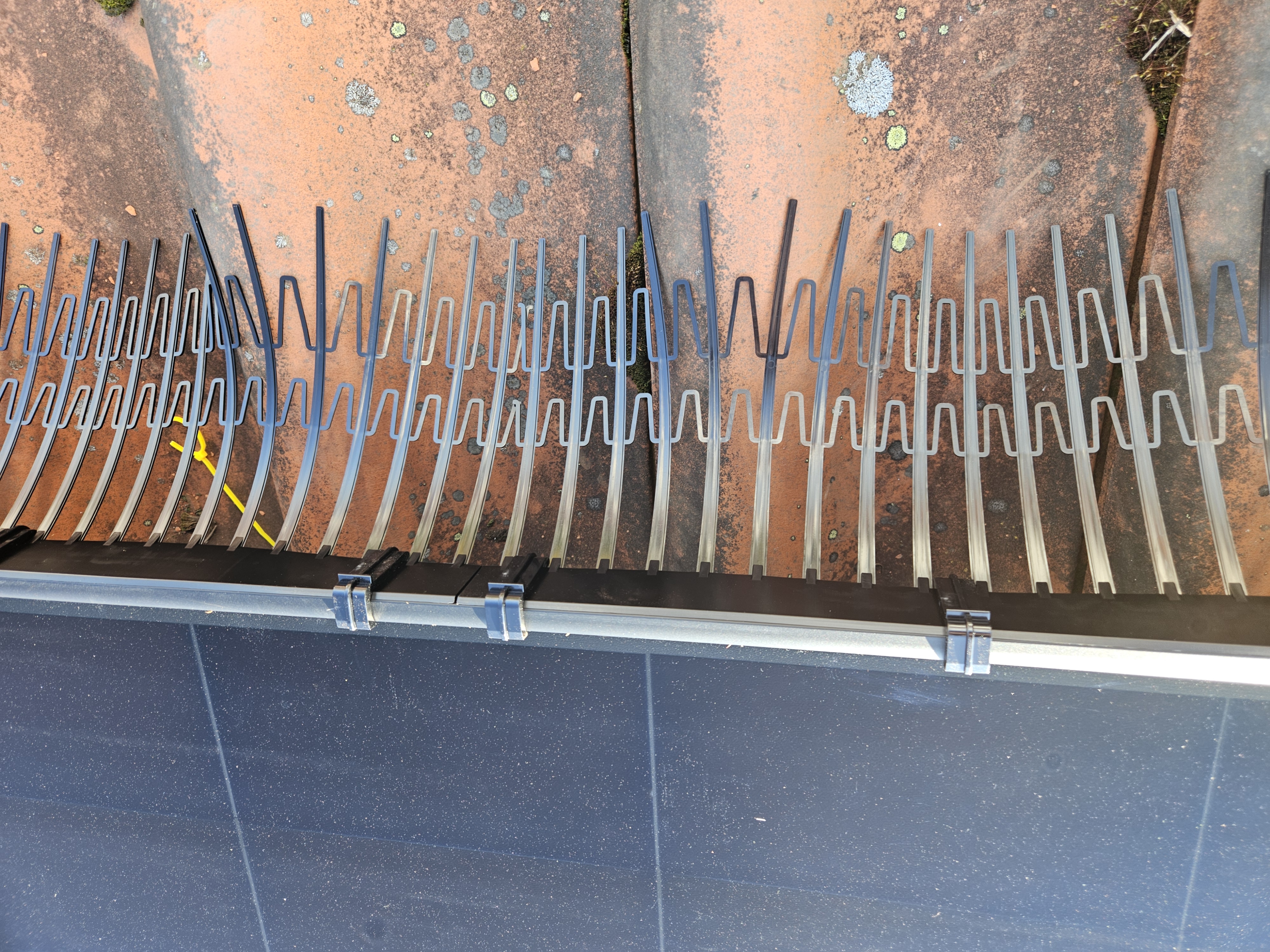
Because sparrows exploit very small gaps, partial protection systems (e.g., mesh installed only along the lower array edge) are ineffective. The bird will simply move to the side or top edge. A professional bird protection system must form a continuous perimeter seal.
For roof types with ridge tile gaps, additional ridge protection (such as comb fillers or extended brush segments) may be required alongside the perimeter system.
Starlings: Aggressive Cavity Occupiers
Scientific name: Sturnus vulgaris Body length: 19–22 cm Common locations: Commercial pitched roofs, agricultural buildings, suburban rooftops with older tile systems
Nesting Behaviour
Starlings are slightly larger than sparrows and more aggressive in defending nesting sites. They prefer enclosed cavities with a small entrance — conditions that solar arrays on pitched roofs often create. Starlings are also highly vocal; homeowners frequently report the noise as the initial complaint rather than visible bird activity.
Unlike sparrows, starlings will sometimes attempt to enlarge gaps by dislodging loose tiles or pushing aside improperly secured mesh. A starling can force entry through a 25–30 mm gap that a pigeon cannot.
Starlings nest earlier in the season than pigeons (late March to April in the UK and Central Europe), which means installer callbacks from starling activity often come sooner in the year.
Damage Patterns
Starling damage mirrors sparrow damage but at a slightly larger scale:
- Higher droppings volume compared to sparrows, but still less than pigeons. - Nesting material packed tightly under the array, often incorporating moss, leaves, and small twigs. - Potential for multiple nests in a single installation, particularly on larger commercial arrays.
Because starlings can be more persistent, they may return to an inadequately protected site multiple times within the same season, even after nest removal.
Installation Considerations
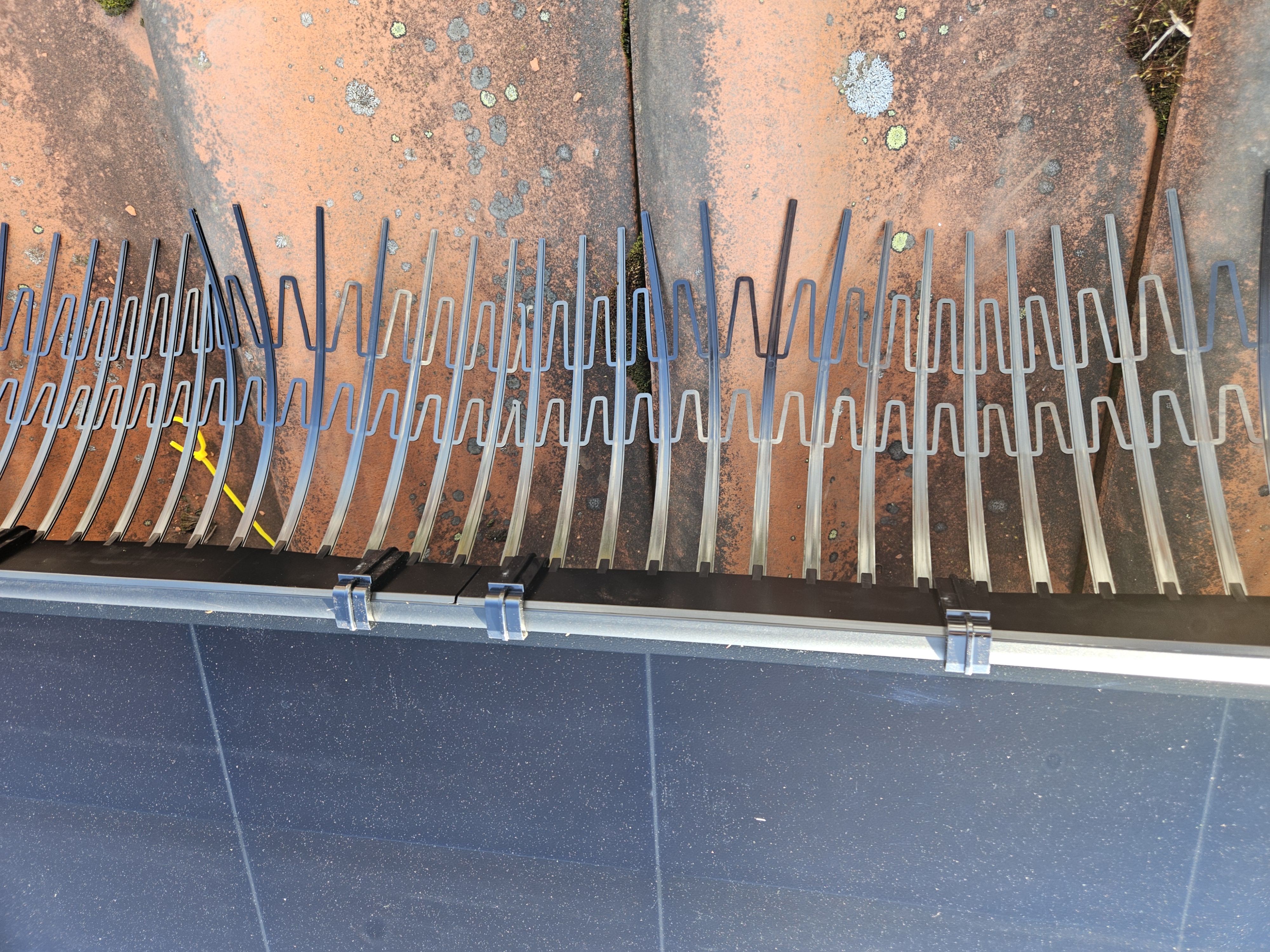
Starlings test perimeter protection systems more aggressively than sparrows. Any gap in the mesh or poorly secured clip will be exploited. Installers should verify that:
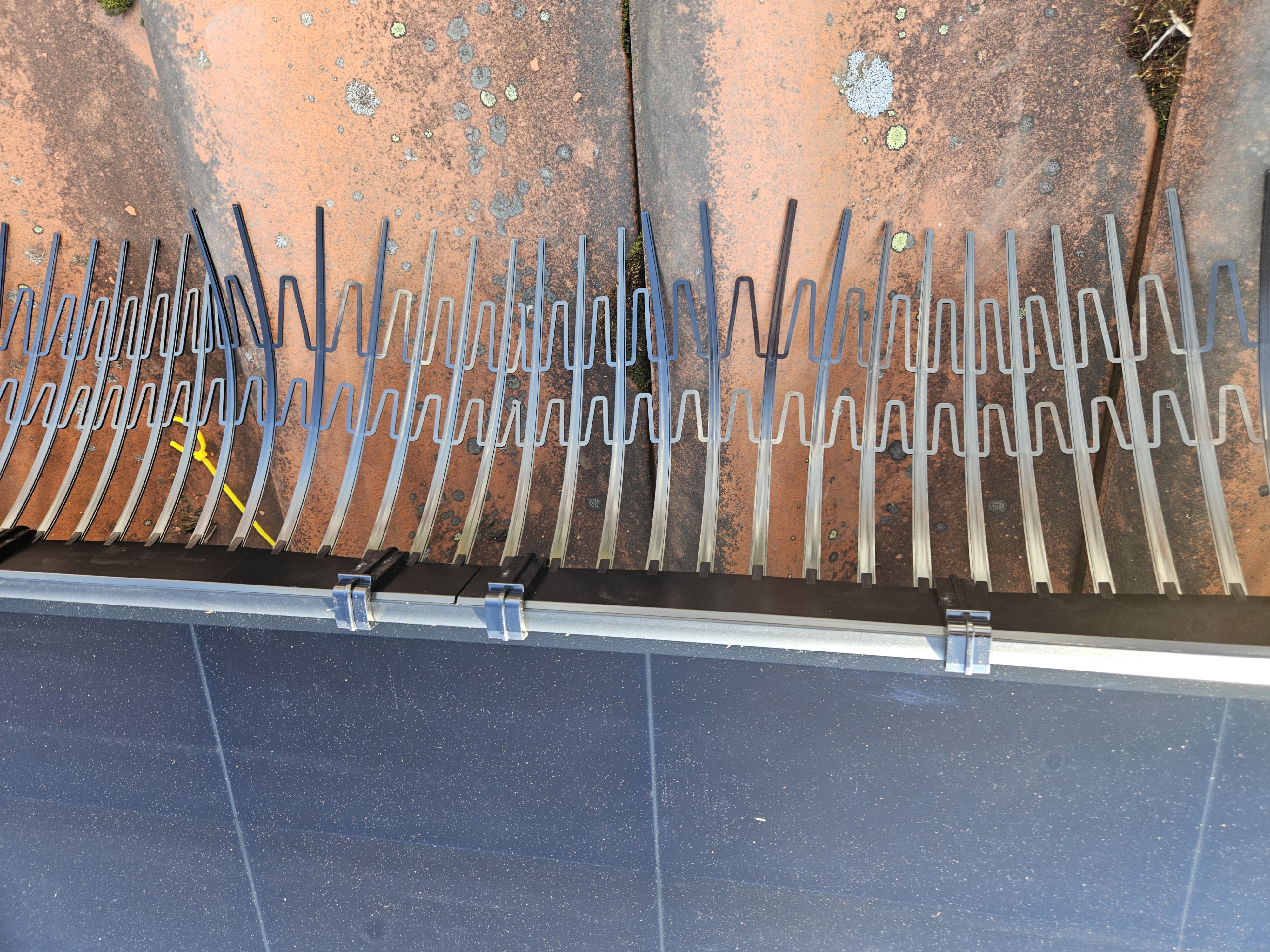
- The C-Clip engagement is secure on all four sides of the array - Cable Ties are tensioned correctly to prevent segment flex - No gaps exist at roof penetrations, such as flue vents or soil pipes
For detailed guidance on pigeon behaviour and nesting patterns — which starlings and sparrows share some characteristics with — see our dedicated species guide.
Pigeons: The Dominant Urban Nester
Scientific name: Columba livia domestica (feral pigeon) Body length: 29–37 cm Common locations: Urban rooftops, commercial buildings, industrial sites
We've covered pigeons extensively in a separate article, but for context in this comparison:
- Pigeons are the largest of the three species and build the bulkiest nests. - Pigeons produce the most droppings — both in volume and in visible impact on panel surfaces and surrounding roofing. - Pigeons require larger gaps to enter (35 mm+), but once inside, they occupy more space and create more obstruction.
From a damage-cost perspective, pigeons are the highest-risk species. However, sparrows and starlings should not be dismissed as "minor issues" — their smaller size means they can enter arrays that appear superficially well-protected.
Species Comparison Table
House Sparrow: Body Length: 14–16 cm | Typical Gap Entry Size: 15–20 mm | Nest Size: Small (10–15 cm) | Droppings Volume: Low per bird, high in colonies | Repeat Nesting Risk: High
Starling: Body Length: 19–22 cm | Typical Gap Entry Size: 25–30 mm | Nest Size: Medium (15–20 cm) | Droppings Volume: Moderate | Repeat Nesting Risk: Very high
Feral Pigeon: Body Length: 29–37 cm | Typical Gap Entry Size: 35+ mm | Nest Size: Large (20–30 cm) | Droppings Volume: High | Repeat Nesting Risk: High
All three species are excluded by a correctly installed perimeter protection system. The differences matter for diagnosis and customer education, but the solution remains the same: continuous physical barrier around the entire array perimeter.
For species identification guidance, the RSPB's bird identification database is a reliable reference for UK and European bird species.
What This Means for Your Next Installation
If you're quoting a retrofit bird protection system and the homeowner reports "small birds" or "lots of chirping", consider the following:
1. Inspect for smaller gaps. Sparrows and starlings don't need large entry points. Check ridge tiles, side flashings, and any roof penetrations.
2. Plan for continuous perimeter protection. A partial system installed only on the lower edge is ineffective against sparrows, who will simply move to the unprotected side or top.
3. Educate the customer on repeat risk. Sparrows and starlings are highly site-faithful. If the customer delays installation, expect the birds to return next season.
4. Set realistic timelines. Spring installation (before nesting season begins) is ideal. If you're called out during nesting season, in the UK and most EU countries, active nests with eggs or chicks are legally protected. Nest removal must wait until the young have fledged.
The good news: whether you're dealing with sparrows, starlings, or pigeons, the installation process is identical. A tool-free, clip-mounted perimeter system works for all species because it eliminates the gap, regardless of the bird's size.
Different Birds Nesting Under Solar Panels: Same Protection Solution
Sparrows and starlings nest differently than pigeons — they're smaller, exploit narrower gaps, and are often underestimated by homeowners and installers alike. But the damage mechanisms (droppings, nesting material near cables, ventilation obstruction) are fundamentally the same.
Understanding species behaviour helps you diagnose the problem, communicate effectively with your customer, and avoid the trap of partial protection. But the solution is universal: a continuous, professionally installed perimeter barrier that physically excludes all bird species from the sub-array cavity.
Whether it's a house sparrow squeezing through a 20 mm ridge gap or a pigeon building a nest under the lower edge, the principle is the same — close the gap, prevent the problem.
For more on professional installation best practices across all bird species, see our installer's guide to bird protection for solar panels.
Comments