
Solar Panel Cleaning Bird Protection: How Bird Protection Makes the Difference
Updated: Apr 11
Solar panel cleaning bird protection — Keeping solar panels clean is one of the most important — and most underestimated — aspects of PV system maintenance. Soiling can reduce energy output by 5–25% depending on location, climate, and the type of contamination involved. For installers and O&M providers, understanding what causes soiling and how to manage it efficiently is essential for maintaining system performance and client satisfaction.
But not all soiling is created equal. While dust, pollen, and atmospheric deposits are the usual suspects in cleaning guides, the single most damaging source of panel contamination in urban and suburban rooftop installations is bird activity — specifically pigeon droppings and nesting debris.
This article covers practical cleaning best practices for solar panels and explains why proactive bird protection is one of the most effective ways to reduce long-term cleaning costs.
Solar Panel Cleaning Bird Protection: Why Clean Solar Panels Matter
Solar panels generate electricity when sunlight reaches the photovoltaic cells beneath the glass surface. Any layer of contamination — however thin — reduces the amount of light that reaches those cells. The result is lower energy yield, reduced system efficiency, and in some cases, accelerated hardware degradation.
Soiling losses vary widely across regions, but studies consistently show that neglected panels in moderate climates lose between 5% and 15% of their rated output within the first year. In areas with high bird populations, this figure can climb significantly higher — particularly when droppings concentrate on specific cells and create localised hot spots.
For system owners, this means lost revenue. For installers who offer O&M contracts, it means higher service costs and more frequent site visits.
Common Sources of Solar Panel Soiling
Understanding the source of contamination helps determine the right cleaning approach and frequency.
Atmospheric Dust and Pollen
General dust, sand, and pollen are the most common forms of soiling in most regions. These particles settle evenly across the panel surface and are often partially removed by rainfall. In dry climates or during extended periods without rain, manual cleaning may be required every 3–6 months.
Industrial and Traffic Pollution
Panels near highways, factories, or construction sites may accumulate oily or chemical residues that are more difficult to remove. These require specialised cleaning solutions and more frequent attention.
Bird Droppings and Nesting Debris
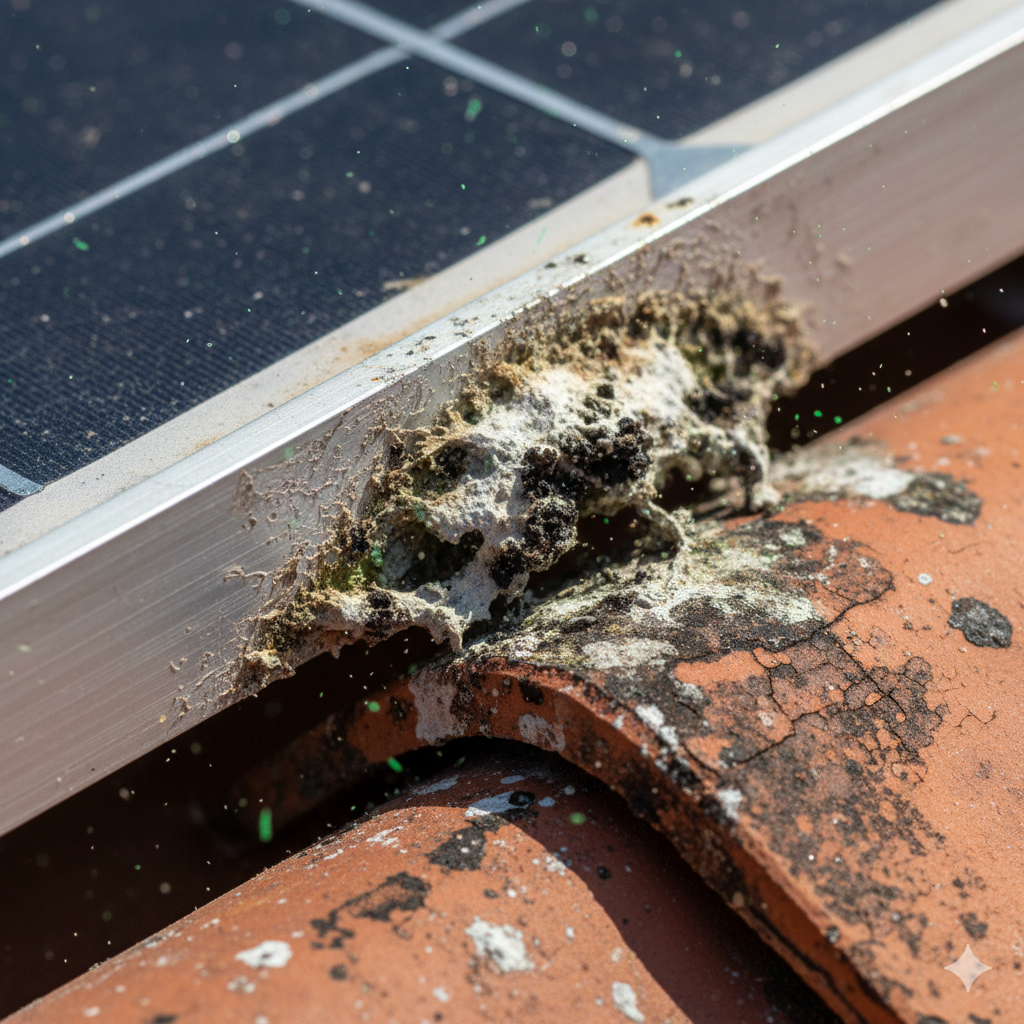
Bird waste is the most aggressive form of soiling on rooftop PV systems. Pigeon droppings have a pH between 3 and 4.5, making them mildly acidic. Unlike dust, bird droppings adhere strongly to glass surfaces and do not wash off in rain. Over time, they etch into the anti-reflective coating on the module glass, causing permanent optical losses.
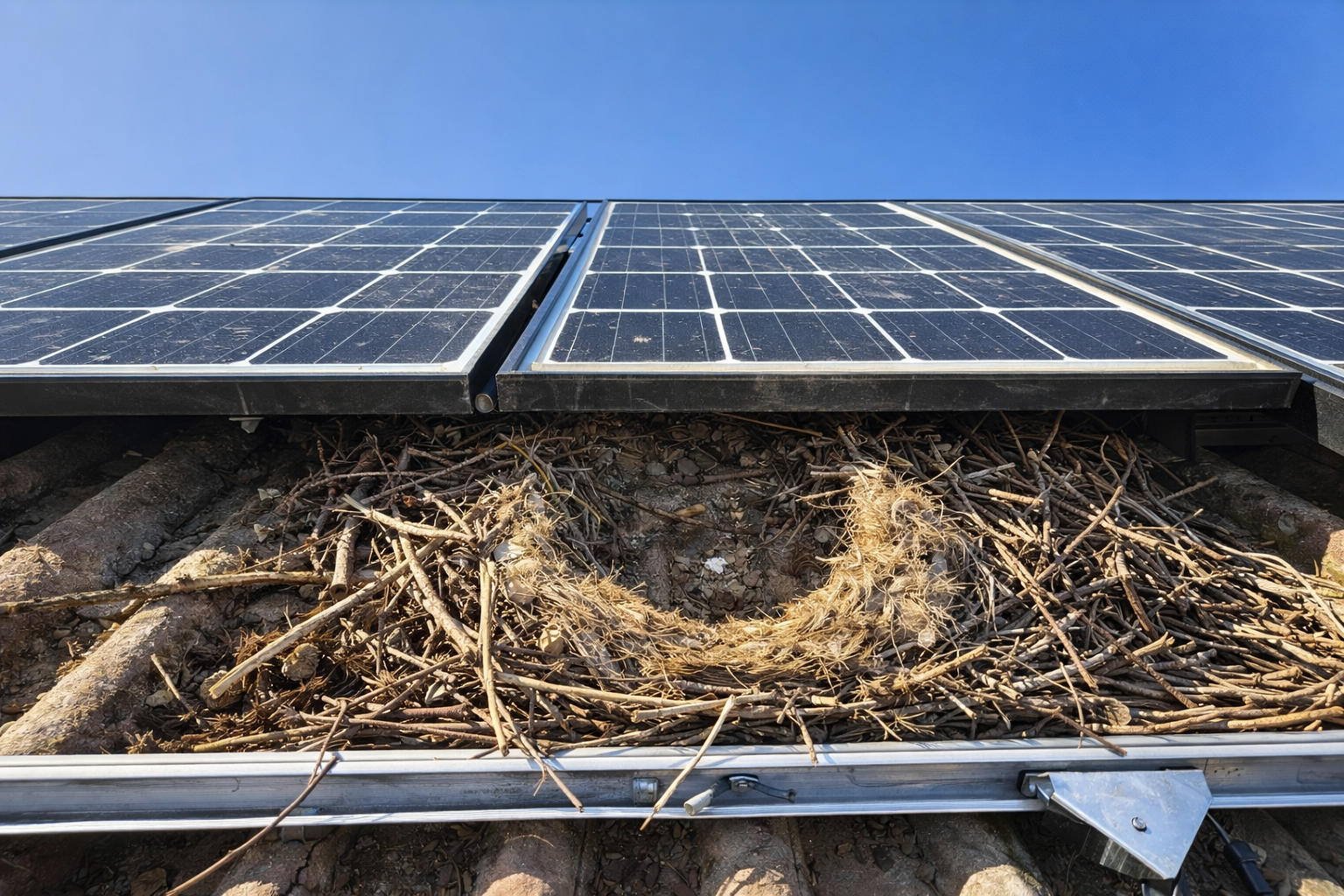
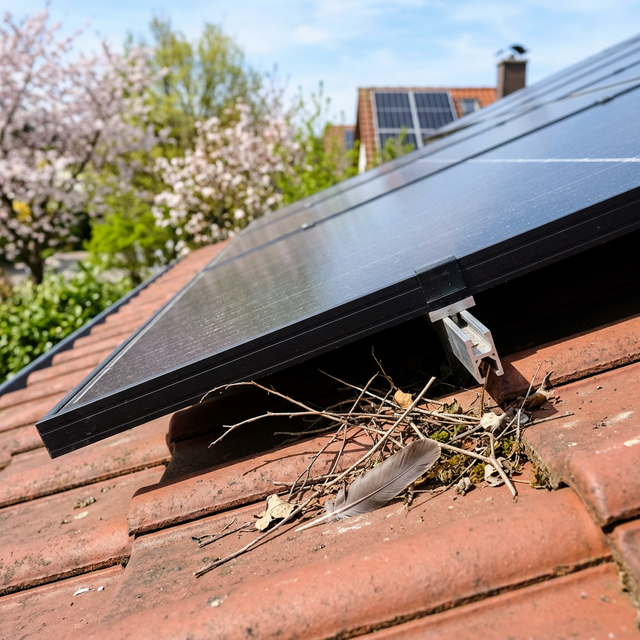
In addition to droppings, birds that nest beneath panels scatter feathers, straw, twigs, and other organic material across the array. This debris collects in gutters, around frame edges, and on the panel surface itself — all of which impede drainage and accelerate soiling accumulation.
Solar Panel Cleaning Best Practices
Regardless of the contamination source, the following best practices apply to any PV cleaning programme.
Use Deionised or Softened Water
Tap water often contains minerals that leave white residue on panel glass after drying. Deionised water or softened water prevents mineral deposits and ensures a streak-free finish.
Avoid High-Pressure Washers
While tempting for speed, high-pressure water jets can damage module seals, frames, and cable connections. Use low-pressure water flow combined with soft brushes or microfibre pads. Manual or semi-automated cleaning systems designed for PV applications are preferred.
Clean Early in the Morning or Late Afternoon
Cleaning panels when they are hot — in full midday sun — can cause thermal shock to the glass and may leave water spots. Early morning is ideal: panels are cool, and any dew on the surface helps loosen dirt.
Never Use Abrasive Tools or Harsh Chemicals
Standard household cleaners, solvents, or abrasive sponges can scratch the anti-reflective coating on solar glass, permanently reducing light transmission. Use only pH-neutral cleaning agents approved for solar panel use.
Inspect While You Clean
Cleaning visits are an ideal opportunity to inspect cables, connectors, mounting hardware, and the underside of the array. Look for signs of bird nesting, cable abrasion, corrosion, or loose components. Combining cleaning and inspection reduces total site visit costs.
The Hidden Cost of Bird-Related Soiling
While general dust soiling can often be managed with one or two cleaning visits per year, bird-related soiling frequently requires quarterly or even monthly intervention — especially on urban rooftops where pigeon populations are established.
The cost difference is significant. A standard residential system cleaning costs variable costs per visit in most European markets. A system affected by bird contamination may require 3–4× as many visits, pushing annual cleaning costs from to or more — not including the energy losses during the intervals between cleans.
For commercial systems, the cost multiplier is even more dramatic. A 100 kWp rooftop array with persistent bird soiling can lose variable costs per year in combined cleaning costs and energy losses.
And these are recurring costs — year after year — for as long as the bird population has access to the array.
Why Bird Protection Is a Cleaning Cost Reduction Strategy
This is where bird protection shifts from being a "nice to have" accessory to a measurable cost reduction measure.
PV Protector® mesh systems seal the gap between the panel frame and the roof surface, preventing birds from nesting beneath or roosting on the array. By eliminating the habitat, you eliminate the primary source of aggressive soiling.
The practical impact is clear. Systems fitted with bird protection at commissioning typically require only annual cleaning — the same interval as systems in low-soiling environments. That alone can reduce cleaning costs by 60–75% over the system's lifetime.
For installers, this makes bird protection an easy value-add when quoting O&M packages. For system owners, it's one of the few accessories with a directly calculable return on investment.
When to Install Bird Protection
The most cost-effective time to install bird protection is during the initial PV installation. Access to the roof is already arranged, scaffolding or safety equipment is in place, and the panels are clean and free of existing nesting.
Retrofit installation is also possible — and often necessary on systems that are already experiencing bird problems — but it requires additional steps: nest removal, cable inspection, surface cleaning, and potentially pest control coordination. All of which add cost.
If you're an installer, the recommendation is simple: include bird protection in every rooftop installation quote as a standard line item. It protects the system, reduces future maintenance burden, and gives your client a cleaner, more reliable PV system from day one.
Conclusion
Solar panel cleaning is a necessary part of PV system ownership — but how much cleaning a system needs depends largely on what's contaminating it. For rooftop installations in urban and suburban areas, bird activity is the dominant factor driving cleaning frequency and cost.
By combining good cleaning practices with proactive bird protection using systems like PV Protector®, installers and system owners can significantly reduce long-term maintenance costs, protect panel surfaces from permanent damage, and maintain optimal energy output year after year.
Prevention is always cheaper than remediation. And in solar O&M, preventing bird access is the single most effective step you can take to keep your panels clean.
Comments