
Solar Installation Margin: Why Accessories Are Where Installers Now Earn It
For most installers the maths on a residential job has quietly inverted. Module hardware has become a fiercely competitive, low-margin line, so a healthy solar installation margin no longer comes from the panels — it comes from labour efficiency and from the accessories you attach to the quote. The question for an installer business is no longer "what does the kit cost?" but "which line items still hold their margin, and which ones quietly give it back through callbacks?" Bird protection sits squarely in the first group, and this article explains why.
The discussion here assumes a pitched-roof photovoltaic array with a defined lower module edge. PV Protector® is engineered for pitched roofs; it does not fit flat-roof ballasted systems, ground-mount, or open-field PV. The margin logic below is written for the residential and small-commercial pitched-roof work that fills most installer order books.
Why Module Hardware Stopped Carrying the Job
Module and inverter pricing is now set by a transparent, globally competitive market. Customers compare panel brands online, distributors publish list pricing, and the spread between installers on the hardware line has narrowed to almost nothing. That is good for adoption — but it means the hardware line is no longer where a job earns its keep.
Two things still belong to the installer: the quality and speed of the labour, and the accessories specified around the array. Accessories are not all equal, though. A commodity consumable that the customer can price-check in seconds behaves like the panels — it gets shopped. An engineered accessory that solves a real problem, ships as part of a complete protected-array proposal, and is hard to compare line-by-line behaves very differently. It defends its margin because the customer is buying an outcome, not a part number.
How a Tool-Free Accessory Protects Your Solar Installation Margin
The fastest way to lose a solar installation margin is not a bad quote — it is the unbudgeted return visit. A pigeon nesting under an array three months after handover means a half-day lost, a technician back on a roof you had already closed out, and an awkward conversation with a customer who thought the job was finished. That callback comes straight out of the margin you booked on the original install.
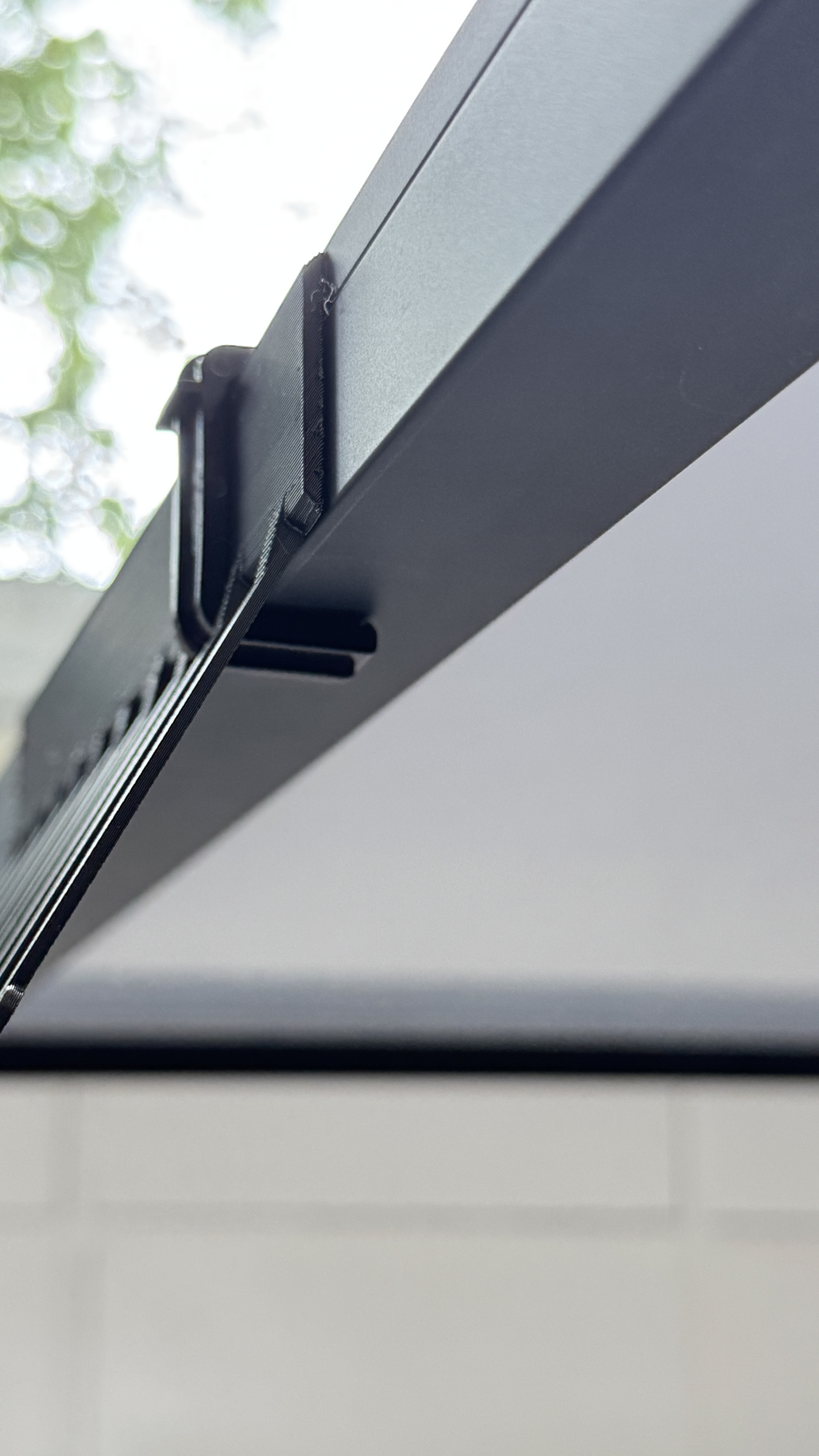
Bird protection earns its place on the quote precisely because it removes that risk before it appears. The way the system installs is what keeps it margin-positive on the labour side:
- Tool-free fixing. The C-Clip snaps the Perimeter Segment onto the module frame with no drilling, so there is no per-panel bracket to sort and no slow, fiddly fastening at height. Less time on the roof is less labour cost against the same line price. - One clip fits the fleet. A single C-Clip covers 30, 35 and 40 mm module frame heights, so you are not stocking three clip variants or pausing mid-job to find the right size. The Perimeter Segment comes in two heights — 150 mm (Standard) and 200 mm (Extended) — to bridge the gap to the roof covering. - No warranty exposure. Because nothing is drilled into the module frame, you are not carrying the risk of a future module-warranty dispute — the kind of open-ended liability that can wipe out the margin on a dozen jobs at once.
Engineered durability is part of the same equation: the Perimeter Segment is HDPE with UV stabilisers 944 and 622, the C-Clip is moulded from UV-stabilised PC+ABS, and the Cable Tie is UV-stabilised PA66. Components built to last on an exposed roof — and backed by a 10-year warranty in the manufacturer specification — are components that do not generate the replacement callbacks that erode margin over a fleet of installs.
Make It Standard, Not Optional
The single biggest lever on accessory margin is the attach rate — how often the line actually makes it onto the quote. An optional extra that the customer is invited to decline attaches rarely and unpredictably. A standard inclusion attaches on nearly every job, and predictable attach is what turns a small per-job figure into a meaningful annual contribution.
Quoting bird protection as a standard part of the package, rather than a bolt-on the customer has to opt into, does three things for the business:
- It normalises the line, so the customer reads it as part of a complete, professional installation rather than an upsell. - It removes the per-job decision, so the office is not re-pricing protection every time. - It builds a recurring, forecastable accessory contribution across the order book instead of an occasional one.
For the practical mechanics of putting it on the quote, see the guide on how to quote bird protection as a standard line item.
The Value Story That Justifies the Line
A margin holds only when the customer understands what they are buying. With bird protection the value story is concrete and easy to tell: an unprotected array invites nesting, droppings, blocked ventilation, and cabling exposed to abrasion — all of which translate into cleaning, lost yield, and the repair the homeowner did not budget for. Framing the line as protection against those ongoing costs, rather than as a part, is what lets it sit on the quote without being shopped. The detail behind that argument is set out in the hidden maintenance costs of bird activity on rooftop PV systems.
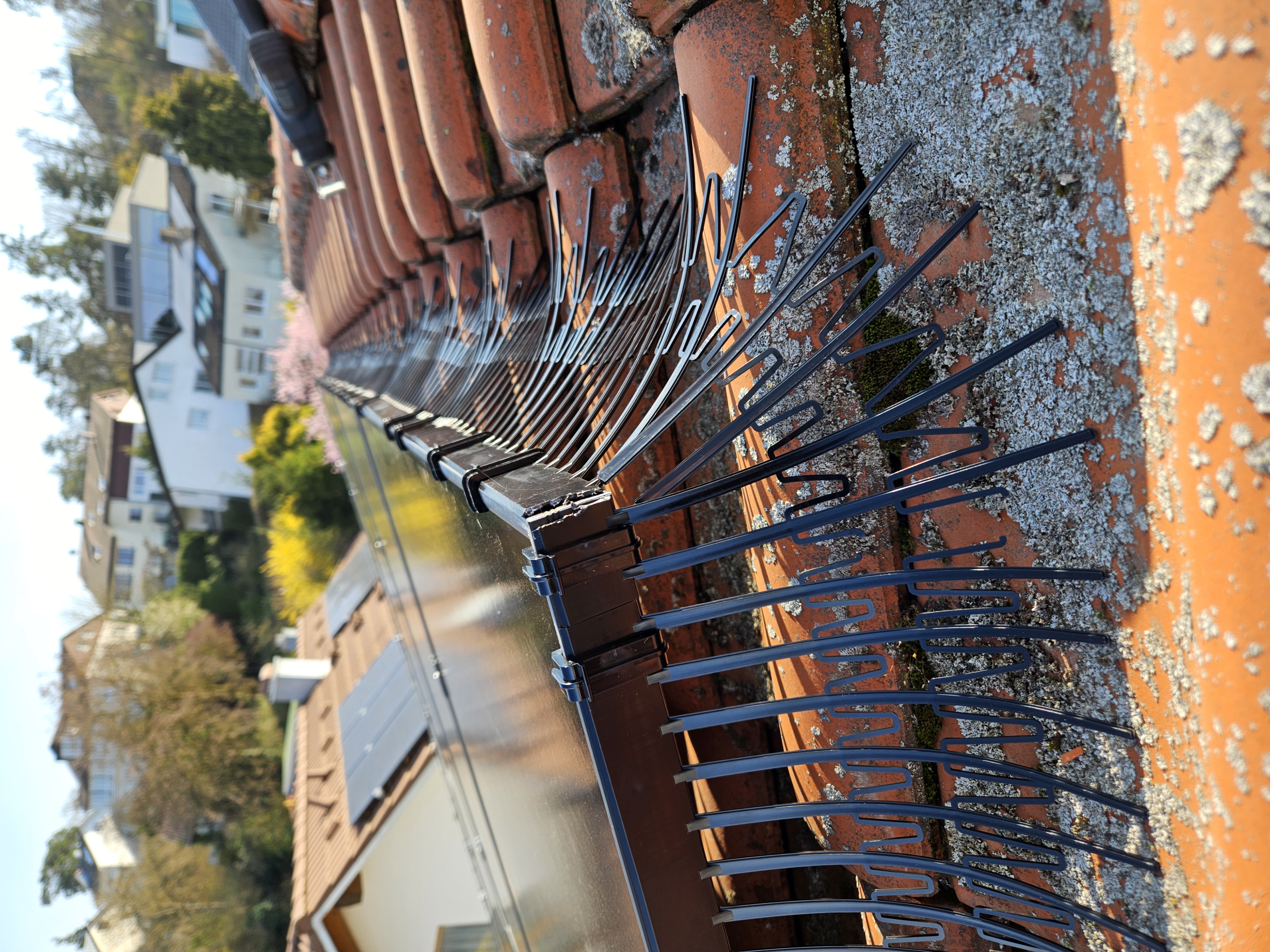
The wider market backs the direction of travel: as European rooftop solar scales, demand for the accessories that protect those systems is growing alongside it, a trend tracked in market analysis from bodies such as SolarPower Europe. An installer who has standardised a clean, defensible protection line is positioned for that demand rather than chasing it.
The Channel Angle for Higher-Volume Businesses
For installers running serious volume — or distributors building a range — the margin story extends past the single job. A product that installs the same way every time, fits almost every current module frame from one SKU, and generates few support calls is exactly the kind of line that holds its terms through the channel. If you are looking at carrying bird protection as a stocked range rather than a per-job order, the distributor and accessories-range overview covers how the product fits a partner programme.
Protect the Margin You Already Quote
The accessories line is where the modern solar installation margin is won or lost — and bird protection is one of the few additions that improves margin on both sides of the ledger: it adds a defensible line to the quote, and it removes the callback that would otherwise claw your margin back. The components make that possible: PV Protector® Perimeter Segments (HDPE with UV stabilisers 944 and 622), C-Clips (UV-stabilised PC+ABS) and Cable Ties (UV-stabilised PA66), fitted tool-free on pitched roofs and backed by a 10-year warranty.
To put a standard, margin-positive protection line on your next quote — or to discuss installer-partner conditions and stocking through your distributor — talk to the PV Protector® team.
Comments