
Drone Inspection Solar Panels: Aerial Thermography for Commercial Arrays
Walking a 5,000-module rooftop with a handheld thermal camera takes days. Flying it takes an afternoon. That is the simple arithmetic behind drone inspection solar panels workflows, and it explains why aerial thermography has moved from novelty to standard practice in commercial photovoltaic operations and maintenance. This article looks at what a drone-based inspection actually delivers on a commercial pitched-roof array, which standards and flight rules apply in the EU, and — just as important — what to do with the findings once the drone has landed.
Why Commercial Arrays Are Inspected From the Air
On a residential system, a technician can inspect every module from a ladder or the roof itself. On a commercial pitched-roof array — an agricultural barn, a light-industrial hall, a multi-family development — that approach breaks down. Access is slower, fall-protection requirements add cost, and walking fragile roof surfaces carries its own risk.
An aerial survey changes the economics. A drone with a radiometric thermal camera covers the whole generator in one flight, captures both infrared and visual images, and produces a documented, repeatable record of array condition. According to the IEA-PVPS Task 13 review of infrared and electroluminescence imaging, IR imaging reliably reveals thermal anomalies such as hot spots, shunted cells and disconnected modules or strings — exactly the failure modes that quietly erode commercial yield. The same review notes that more and more EPC and O&M providers now offer regular IR inspections as part of their service portfolio.
There is a catch worth naming: aerial infrared measurement is sensitive to conditions. Irradiance, ambient temperature, wind, flight height and camera angle all influence what the sensor records. A flight on a hazy, low-irradiance day can hide faults that a clear-sky flight would expose.
How a Drone Inspection Solar Panels Workflow Runs
A professional inspection is more than a pilot with a thermal camera. The reference document for the measurement itself is IEC TS 62446-3, the technical specification for outdoor infrared thermography of PV modules and plants in operation. It defines requirements for the measurement equipment, the ambient conditions under which imaging is valid, the inspection procedure, the report content and the qualification of the personnel interpreting the images.
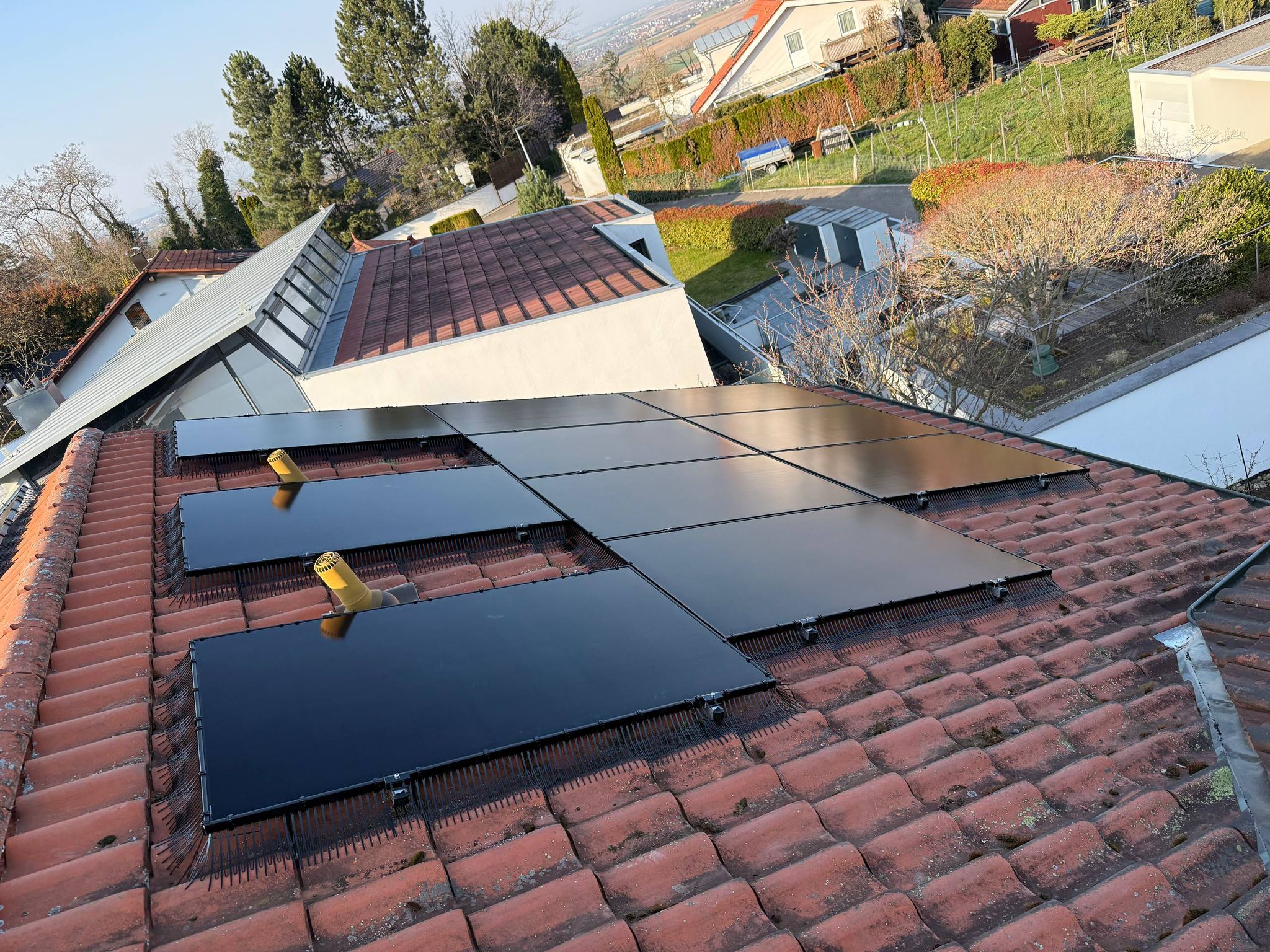
In practice, a well-run aerial inspection follows a recognisable sequence:
- Preparation. Array drawings, string plans and any monitoring alarms are reviewed so the flight targets known problem zones as well as the full generator. - Flight planning. Altitude, overlap and camera angle are set to achieve sufficient thermal resolution per module while keeping reflections out of frame. - The flight itself. IR and RGB images are captured together, because a thermal anomaly only becomes a diagnosis when the visual channel shows what sits at that spot — soiling, a shadow, a cracked module or nesting material. - Analysis and reporting. Anomalies are classified, located on the array plan and prioritised for follow-up, from "monitor at next inspection" to "isolate the string now".
Flight Rules in the EU — the Short Version
Commercial drone flights in Europe operate under Regulation (EU) 2019/947, which sorts operations into three categories: open, specific and certified. Most routine PV inspection flights are planned within the open category, which requires no prior operational authorisation but comes with hard limits — the aircraft stays within visual line of sight, flies no higher than 120 metres above ground, and operates in subcategory A1, A2 or A3 depending on drone class and distance to uninvolved people.
An inspection over an isolated agricultural roof is usually straightforward under these rules. The same flight over a building surrounded by uninvolved people may not fit the open category at all and can require an authorisation in the specific category. Operators should treat the EASA framework as the baseline and confirm registration, competency and any local restrictions with their national aviation authority before offering inspection services.
What Thermal Images Reveal About Bird Activity
Here is the part of the report that surprises many operators: aerial thermography does not only find electrical faults. It also documents biological ones.
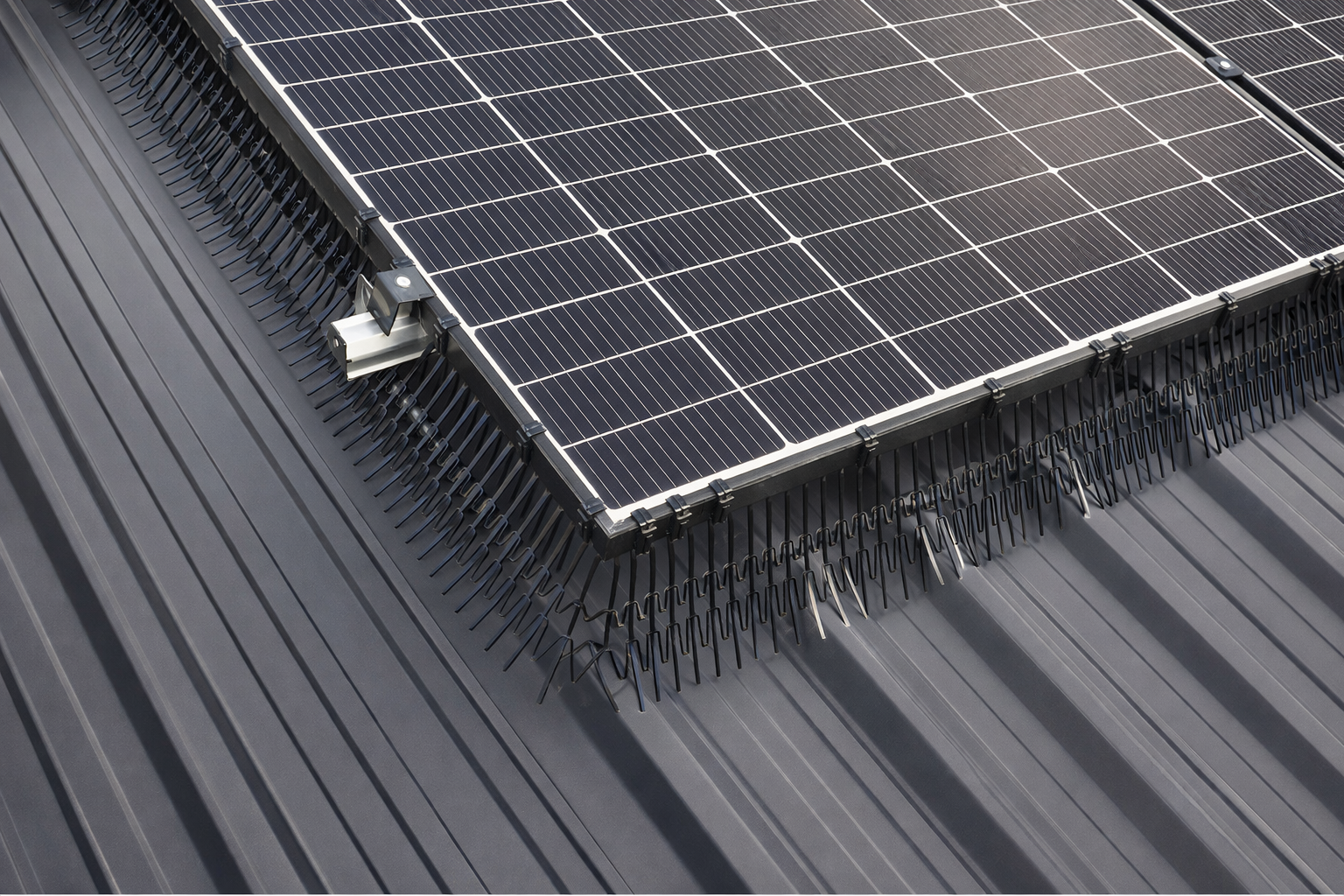
Birds — pigeons above all — favour the sheltered gap under the lower edge of pitched-roof modules. From the air, established nesting appears in two ways. On the visual channel, nesting material, streaks of droppings and accumulated guano are visible at the eaves edge and below the array. On the thermal channel, blocked ventilation paths and heavy soiling change the temperature signature of the affected modules: droppings act as localised shading that can drive hot spots, and restricted airflow under the panel raises operating temperature in the zones where nests sit. Our article on how birds block solar panel ventilation explains why that temperature rise matters for yield and component life.
A drone survey is therefore a highly efficient way to answer a question every commercial operator should ask annually: is there anything living under my array? For the electrical side of the same survey, see our guide to thermographic inspection of solar panels.
From Findings to Fixes — Inspection Detects, Protection Prevents
An inspection report is a diagnosis, not a cure. If the flight documents nesting, droppings and blocked ventilation, removal alone rarely ends the story — cleared nesting sites on an unprotected array are typically recolonised.
The durable answer on a pitched-roof array is to close the gap physically. PV Protector® does this with three components: Perimeter Segments made of HDPE with UV stabilisers 944 and 622, fixed by C-Clips made of UV-stabilised PC+ABS that fit 30, 35 and 40 mm module frames, and secured with Cable Ties made of UV-stabilised PA66. The Segments are available in 150 mm and 200 mm heights to match the gap between module edge and roof surface, install tool-free without drilling into frames or roof, and are backed by a 10-year warranty. The system is engineered for pitched roofs with a defined lower module edge; it is not intended for flat-roof ballasted systems, ground-mount or open-field plants.
For an EPC or O&M provider, the workflow is clean: the drone flight identifies affected arrays and documents the baseline, the retrofit closes the perimeter, and the next scheduled flight verifies the result — a before-and-after record that also strengthens the maintenance file toward insurers and asset owners.
Building Aerial Inspection Into the O&M Calendar
A sensible rhythm for commercial pitched-roof arrays combines continuous monitoring with periodic imaging: review monitoring data monthly, fly a documented thermal inspection on a recurring schedule and after major weather events, and pair every finding with a corrective action and a re-check date. Guidance on structuring that plan sits in our PV system maintenance guide.
Aerial thermography has made array-wide condition data affordable. The operators who benefit most are the ones who treat each drone inspection solar panels report as a to-do list — and who make sure that what the camera found this year, physical protection keeps off the roof next year.
Planning an inspection or a bird-protection retrofit on a commercial pitched-roof array? Talk to the PV Protector® team about terms for installers and project-volume orders.
IEC TS 62446-3 — outdoor infrared thermography of PV plants EASA — drone open category requirements IEA-PVPS Task 13 — review on IR and EL imaging for PV field applications Thermographic inspection of solar panels — finding hot spots How birds block solar panel ventilation and cause overheating PV system maintenance guide for professionals
Comments